



Water Strider 3D Model Animation
Water strider is an insect that lives on the water surface and belongs to the family Hemiptera Strider Pentatomidae. The body is slender, usually grayish brown or black, about 1cm in length, and has slender legs covered with tiny waterproof hairs that enable it to walk on water without sinking. The forewings are shorter, covering only part of the abdomen, and the hindwings are larger, folding under the body. Inhabit mainly in a still water environment and feed on small insects, insect carcasses and other organic debris on the water surface. Strong athletic ability, able to slide quickly on the water, speed up to 1 meters per second, and even able to jump. Their presence usually indicates a cleaner body of water.

Bombardier beetle
The Bombardier beetle is a small insect, usually only 5-13mm long. It is known for its unique defense mechanism: when threatened, it can spray a high-temperature, corrosive chemical spray from the abdomen. This spray is produced by a mixture of hydrogen peroxide and hydroquinone at temperatures up to 100°C, effectively repelling predators. The tail nozzle can be aimed in all directions like a rotating turret, and the spray frequency can reach 500 times per second. It lives mainly in temperate forests and grasslands. It is a carnivorous insect that feeds on other insects and small animals and is nocturnal.

Malay giant flat stick insect
The Malay giant bamboo worm is a huge bamboo worm. The female can reach 14-17cm in length and 30-65g in weight. It is one of the heaviest insects known. The male is about 9-13cm long and brown, with a slender body and a fully developed hindwing. The female is bright green, with short wings covering the dorsum. This insect feeds mainly on plants such as oak, hawthorn, blackberry and ivy. Quiet during the day and nocturnal, with a unique defense mechanism, the female will clamp the predator with her spiny hind legs and scare off the enemy by spreading the rustling of her hindwings.

Animation of 3D model of leaves
The leaf-worms are insects of the order Slub-worms, known for their amazing leaf-mimicry abilities. The body is flat and broad, usually green or brown, matching the color of the surrounding vegetation. The wings and leg extensions mimic the shape and texture of the leaves, and some species even have traces of blade bites on the edges. Females are usually larger than males, with broad forewings, leaf-like midrib s and leaf veins. It lives mainly in tropical rainforests and feeds on the leaves of plants, especially those such as mango and guava. Rely on excellent camouflage to avoid predators, and even shake from side to side when walking, like leaves swaying in the wind.

Giant round hip big fly 3D animation model
The giant round buttock fly, also known as the non-bully hook fly, is one of the largest dragonflies in the world. Adult body length up to 95-100mm, wing span up to 120-140mm. The head and thorax are black with yellow markings and the compound eyes are turquoise. The larvae live in water and prey on small aquatic animals and fish fry. The adults prey on flying insects such as mosquitoes and flies in the air. Distributed in China, Japan and South Korea, in China mainly found in Jiangsu, Zhejiang, Guizhou, Guangdong and other places. It is not only beneficial insects, but also a large number of pests, and its larvae can also be used as an indicator of water pollution.

3D animation model of parthenogenetic
Parthenoptera is a large wingless species that lives in katydids in Eurasia and belongs to the family Orthoptera. The body is slender, with a body length of about 55 to 75mm, and is emerald green or iron cyan. Known for its strong predatory ability, it is specialized in the front and middle feet with spikes and is used to catch prey. A distinctive feature is its parthenogenetic ability, in which a female individual produces offspring without the need for males. Makes parthenogenetic males of the hydatids extremely rare in the wild. It mainly inhabits open grasslands and bushes and feeds on other insects. Mainly distributed in parts of Xinjiang. Due to its unique reproductive mode and large body size, it is classified as a near-endangered species.

Aqua green dragonfly
Dragonflies are a class of ancient insects belonging to the order Odonata. They have a slender body with two pairs of transparent and multi-winged wings that flatten out on either side of the body at rest. The head has a pair of compound eyes, which occupy most of the head, making it have excellent visual ability and can keenly capture moving objects. Incomplete metamorphosis insect. The larvae live in water, breathe through the gills, and prey on small aquatic organisms. The adults, on the other hand, fly through the air, feed on other insects and are excellent fliers, able to move, hover and turn quickly in the air. It is widely distributed around the world, especially in tropical and subtropical regions.

Dragonfly
Dragonflies are a class of ancient insects belonging to the order Odonata. They have a slender body with two pairs of transparent and multi-winged wings that flatten out on either side of the body at rest. The head has a pair of compound eyes, which occupy most of the head, making it have excellent visual ability and can keenly capture moving objects. Incomplete metamorphosis insect. The larvae live in water, breathe through the gills, and prey on small aquatic organisms. The adults, on the other hand, fly through the air, feed on other insects and are excellent fliers, able to move, hover and turn quickly in the air. It is widely distributed around the world, especially in tropical and subtropical regions.

Borneo Lantern Fly Specimen
The Borneo lantern fly is an insect belonging to the family Cicadae, mainly found in the Borneo region of Southeast Asia. Known for its distinctive appearance, the head has a distinct protuberant structure, usually red or orange in color. The wings are brightly colored, often with green or white, and dotted with yellow spots. It lives mainly in tropical rainforests and feeds on the sap of plants. It plays an important role in the ecosystem of Borneo and is an important part of the biodiversity of the region. Due to its unique appearance and ecological habits, the Borneo lantern fly has also attracted the attention of many nature lovers and researchers.

Orchid Mantis 3D Model Animation
The orchid mantis, also known as the flower mantis, is a species of mantis that lives in the tropical rainforests of Southeast Asia. Known for its amazing mimicry abilities, the body is white or pink, with green eyes and an olive-green ring-shaped chest, and the limbs have large petal-like leaves that closely resemble orchids. This mimicry not only helps them avoid predators, but also attracts prey. Mainly distributed in Malaysia, Myanmar, Thailand, the Philippines and Indonesia and other places. It usually inhabits orchid-blooming areas and uses mimicry to catch pollinating insects, such as butterflies, moths, and beetles. It is an ambush hunter who will stand still and wait for the prey to approach before catching it quickly.

stripe shield bug
The striped shield bug is an insect belonging to the family Hemiptera Pentatomidae. Its adult body is 8-12mm long, the body is almost round, with a large shield. The upper lateral base color is orange-yellow with a broad black longitudinal stripe, with six black bands on the pronotum and black antennae. This insect is widely distributed in Europe and feeds mainly on umbelliferae. Eggs are usually placed in groups at the base of host plant leaves, and individuals in the nymphal stage look like mini-adults with irregular patterns, but lack fully developed wings. Adults emerge through a final molt, displaying distinct streaks and a sturdy shield-like body.

Emperor Cicada 3D Model Animation
Emperor cicada is one of the largest cicada species in the world, mainly distributed in Southeast Asia. The adult body length is about 70mm, and the wing span can reach 180-216mm. The body is brown to orange-brown, with central longitudinal stripes on the head, transverse stripes behind the eyes, and spots on the top corners, all black. There are two inverted cone-shaped central spots on the midsteropectum, from which a longitudinal stripe extends to the posterior margin at the junction of these two spots. The wings are transparent and the veins are orange. Belongs to the incomplete metamorphosis insect. Nymphs live underground, sucking the sap from the roots of trees. The adults usually appear between March and May, and the calls of male individuals are very loud.

Pharaoh Cicada 3D Animation Model
Pharaoh cicada is a periodic cicada known for its unique 17-year life cycle. Mainly distributed in the eastern and central regions of North America, including the United States and Canada. The adult body is about 3-4cm long, the body color is black, the wings are transparent, the veins are orange, and the eyes are red. Belongs to the incomplete metamorphosis insect. The nymphs live underground for up to 17 years, sucking sap from tree roots. In the spring of the 17th year, when the soil temperature reaches about 18°C, the nymphs collectively crawl out of the ground and become adults after molting. The adults are mainly active between May and June. The mass appearance of pharaoh cicadas is a natural phenomenon.

Japanese Black Migratory Locust Specimen
The black migratory locust, also known as the black-tailed swamp locust or the black incarapa, is a large locust that lives in East Asia and belongs to the family Orthoptera. The male body length is 33-42mm, the body color is yellowish brown, and the hind knees and wing apex are black; the female body length is 45-49mm, the body color is brown. It mainly inhabits wetlands, swamps or tall grasses, and is distributed in Japan, the Korean Peninsula and parts of China. The active period is from July to September, feeding on grasses. The larvae appear from April to June and feed on herbaceous plants. Although these locusts are larger, they do not harm paddy fields.

periodic cicada specimen
Cyclic cicada is a kind of cicada insect with unique life cycle, mainly distributed in North America. With a life cycle of 13 or 17 years, most of the time in the form of larvae living in the ground, sucking the juice of tree roots. Every 13 or 17 years, the larvae collectively crawl out of the ground, molt and become adults, complete mating and oviposition. Adulthood has a short life span, usually only a few weeks, and is mainly used for reproduction. The adult body is about 2.5-3cm long, with black body color, red compound eyes, transparent wings and yellow veins. Males emit calls by vibrating the tympanic membrane in their abdomen, attracting females. They have an impact on the ecosystem.

Japanese Bear Cicada Specimen
The Japanese bear cicada, also known as the black giant cicada, is a common large cicada in Japan. With a body length of about 40-48mm and a wing end length of 60-65mm, it is one of the largest cicadas in Japan. It is mainly distributed in the area west of Kanto, Japan, including Shikoku, Kyushu, Okinawa, Taiwan and the Korean Peninsula. The body color is mainly black, the surface is shiny, the body surface of fresh individuals is covered with yellow and white micro hair, and there are white stripes on both sides of the abdomen. The larvae feed on tree roots, while the adults suck sap and often gather on mulberry, poplar, persimmon and other plants. Belongs to the incomplete metamorphosis insect. It takes seven years for hatching to eclosion, while the adult life span is only about two weeks.

(mantis) specimen
The mantis, also known as "cicadas", belongs to the hemiptera cicadae. It is a small cicada with a body length of about 2.5cm and a purple-blue or yellow-green color with black stripes. The hindwings are transparent except for the black margin. Males have articulators in their abdomen and can make "chi-chi" calls, which are not as loud as large cicadas, but last longer. Widely distributed, common in China, Japan, the Korean Peninsula and other places. Usually inhabited in lowland, mountainous or urban environments, with a particular preference for trees such as cherry blossoms and pines. It is one of the cicadas that appear earlier in summer. The larvae live in moist soil and feed on the sap of plant roots.

Dragonfly specimen
He is one of the strongest members in the insect kingdom in terms of flying ability, known for his agile flying skills and hunting ability. The body size ranges from small to large, and is divided into three parts: head, chest, and abdomen. The head usually has a pair of large and prominent compound eyes, providing excellent visibility. The wings are transparent or semi transparent, with two pairs, the forewings and hindwings, which can quickly adjust the angle during flight, achieving high difficulty movements such as hovering, quick turning, and diving in the air. Larvae live in water and feed on small aquatic animals, while adults prey on other flying insects in the air. The hunting method is very unique, able to chase and capture prey in the air.

Popular Models
Honey Badger (3D animated model)
192 View
Guinea fowl (3D animated model)
163 View
Wild Goose (3D animated model)
185 View
Red Fox (3D animated model)
153 View
Random Model

Indian Lamb Curry
773 View
Buffalo (3D animated model)
181 View
Chinese braised fish
701 View

Bonfire
512 View



Jin light apple
713 View
French AMX-30 main battle tank
871 View
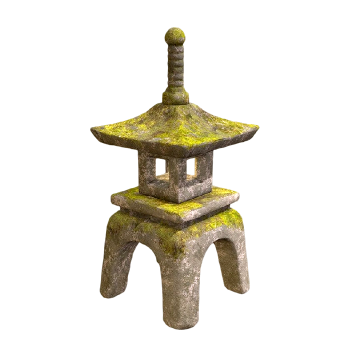
Japanese-style stone lanterns
594 View